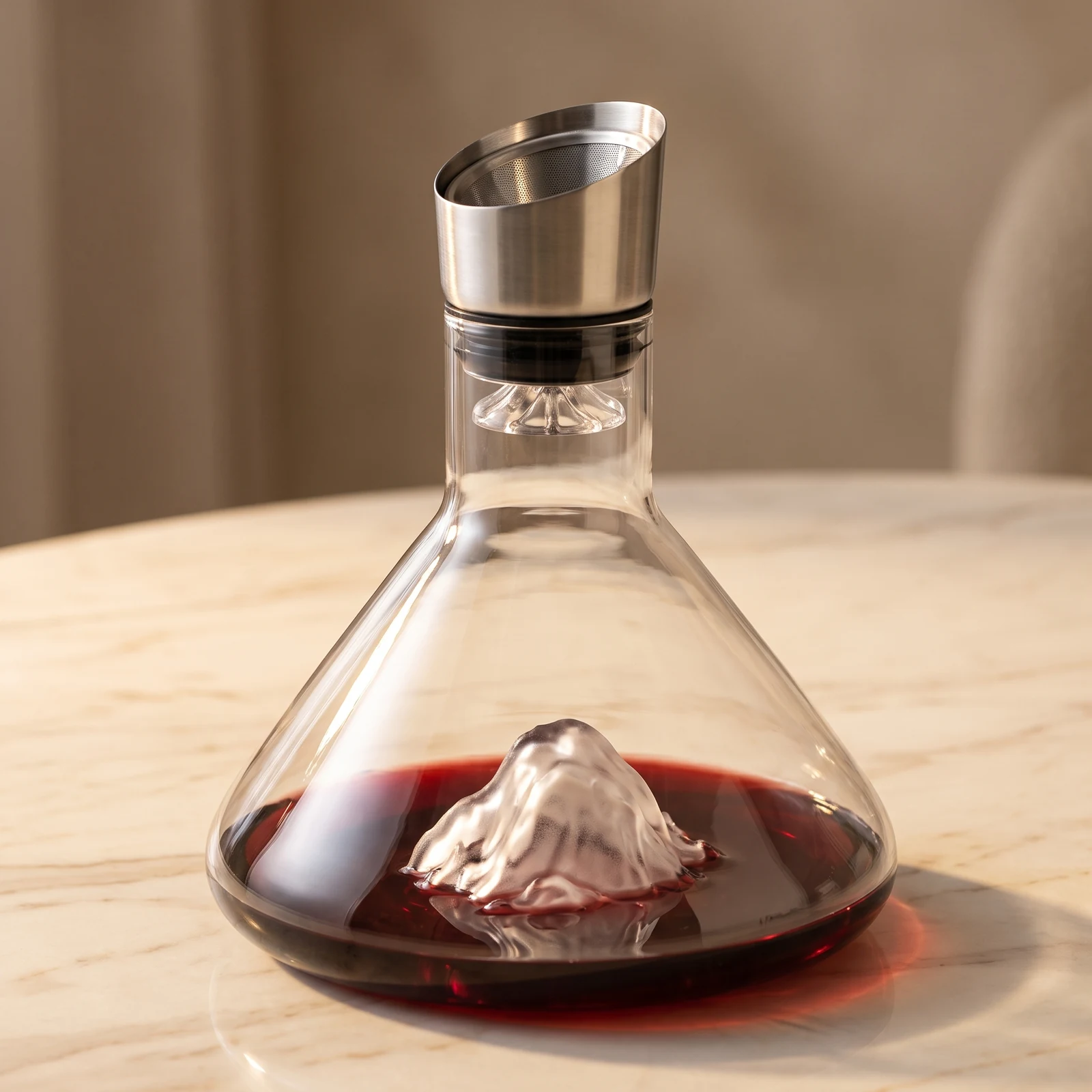
Iceberg Wine Decanter
A young red needs an hour to open. This does it on the way in. Wine hits the steel aerator, fans down the glass cone and breaks over the ice mountain in the base, so it meets air while it is still falling.
Flat $8.95 shipping · ships in 1–3 business days · 30-day returns
How does the iceberg wine decanter aerate?
It is an aerator, a sediment filter and a centrepiece in one piece of glass. A flat-bottomed carafe only exposes the surface of a still pool. This spreads the wine thin as you pour.
| Function | Aerates as you pour; no waiting on a still bottle |
|---|---|
| Filter | Fine mesh in the removable steel funnel — catches cork and sediment |
| Capacity | A full bottle with headroom around the mountain |
| Best for | Young tannic reds; also works with whites |
| Care | Rinse glass body warm; wash the steel funnel separately |
| Ships | Empty. US shipping |
Watch where the air gets in
The stream hits the steel funnel, spreads into a sheet down the inside of the cone and breaks over the peak. That thin, moving sheet is the whole point.
An aerator, a filter and a centrepiece in one piece of glass
Everything a flat-bottomed carafe leaves you doing by hand, built into the shape.
Air on the way in, not an hour later
A standard decanter only exposes the surface of a still pool. Here the wine is spread thin across the cone and the peak while it is still falling, so the opening-up starts before the glass is even full.
The steel top is a filter
A fine mesh sits inside the angled funnel, so bits of cork and the sediment at the end of an older bottle stay out of the decanter instead of ending up in somebody's glass.
The mountain is the reason it looks like that
The sculpted peak in the base is what breaks the sheet of wine apart, and it is also why the thing holds a table. Function first — the centrepiece part is a side effect.
Reads as a gift without wrapping
Clear glass, brushed steel, no branding on the piece. It suits a wedding list, a housewarming or a wine drinker who already owns the obvious things.
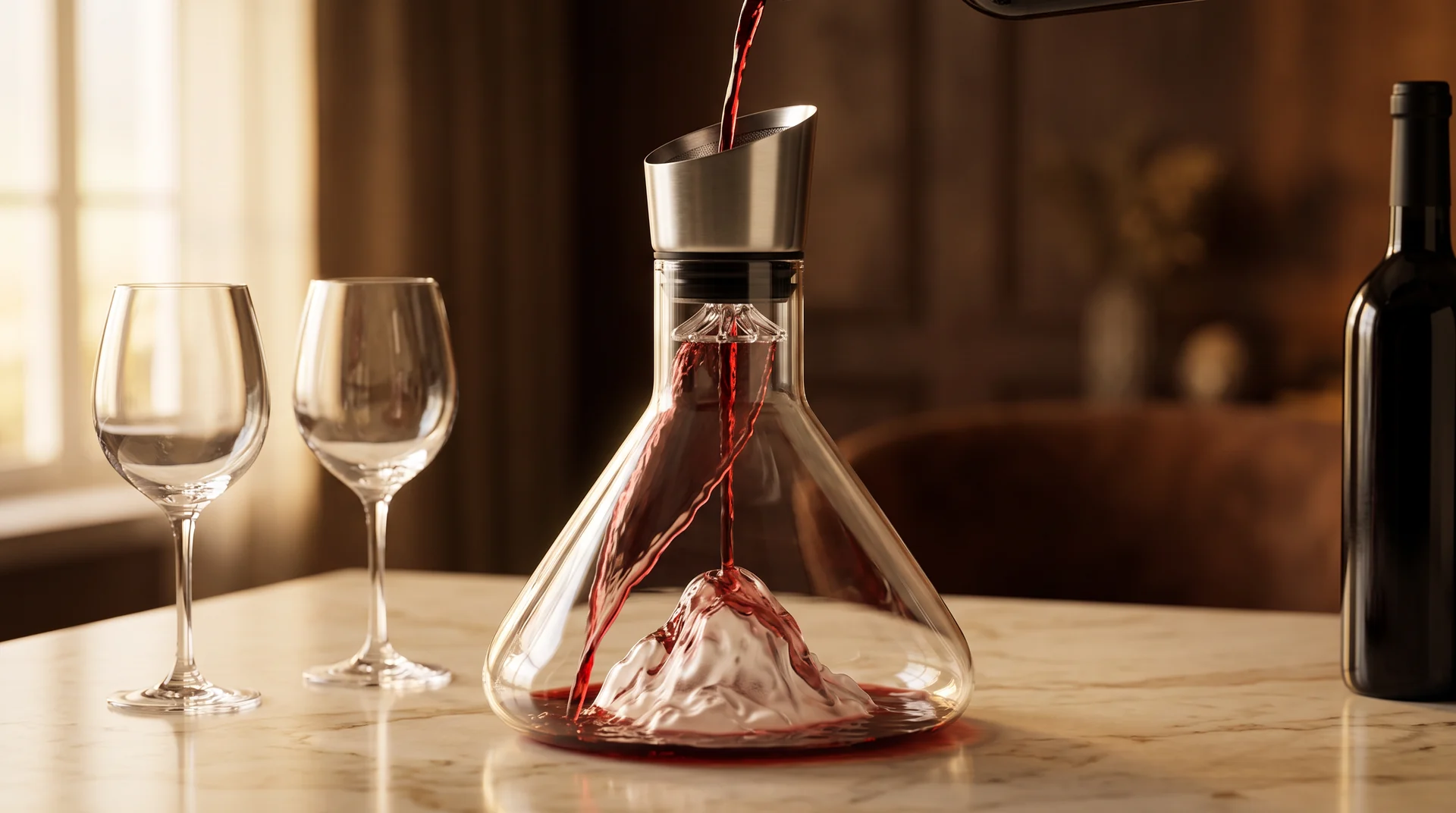
The sheet of wine is doing the work
Pour steadily and the wine leaves the funnel as a thin curtain rather than a stream. Spread that thin over the cone and the peak, far more of it touches air in a few seconds than swirling a glass manages in several minutes.
- Aerates while you pour — no waiting on a bottle
- Pour slower for more air, faster for less
- Works the same on the second glass as the first
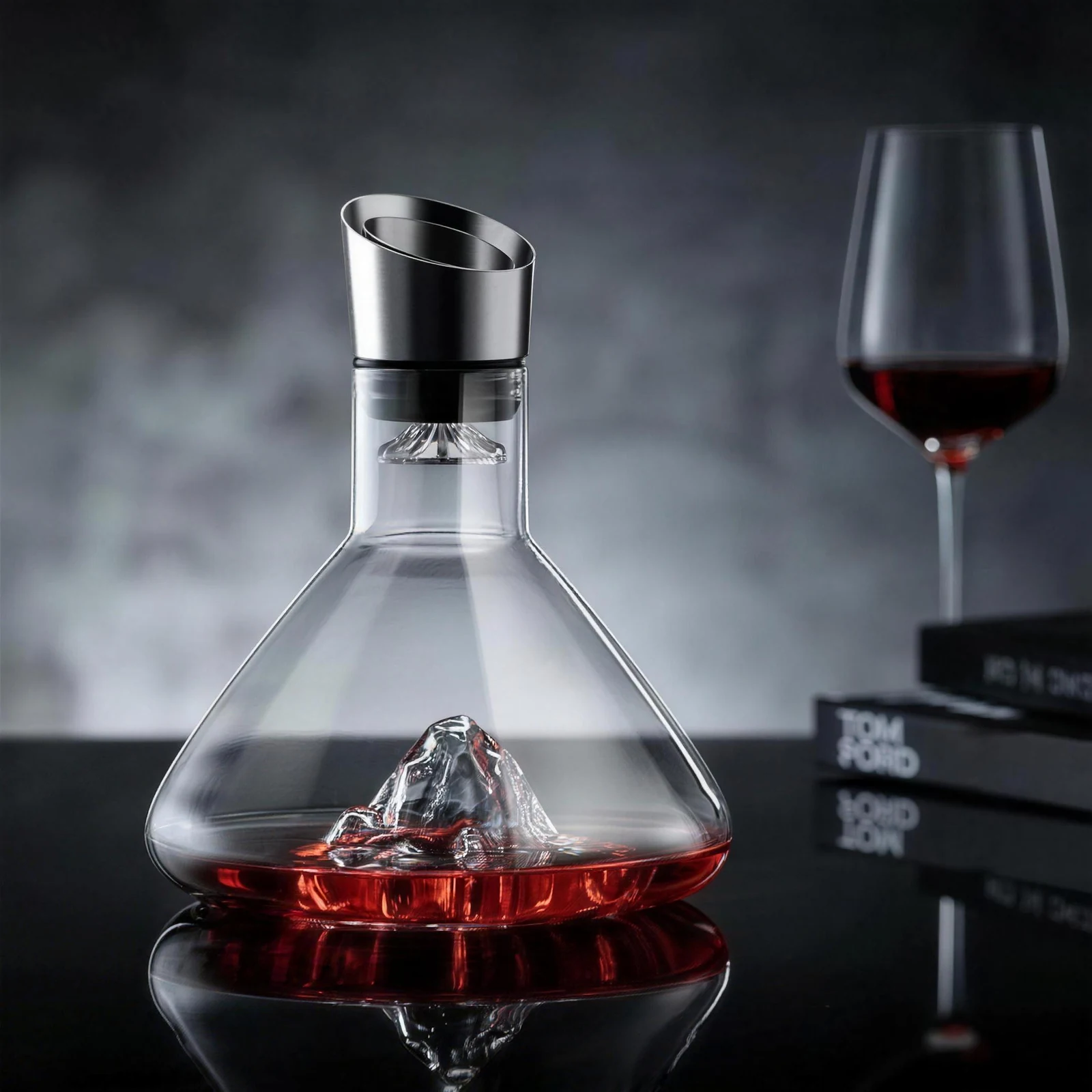
Brushed steel top, lifts straight out
The angled funnel sits in the neck and lifts out in one piece, so the decanter rinses properly and the mesh can be cleaned on its own. The angle is there so you can pour into it without aiming.
- Removable funnel with an integrated mesh filter
- Wide angled mouth — hard to miss, hard to spill
- Rinse warm, stand upside down to dry
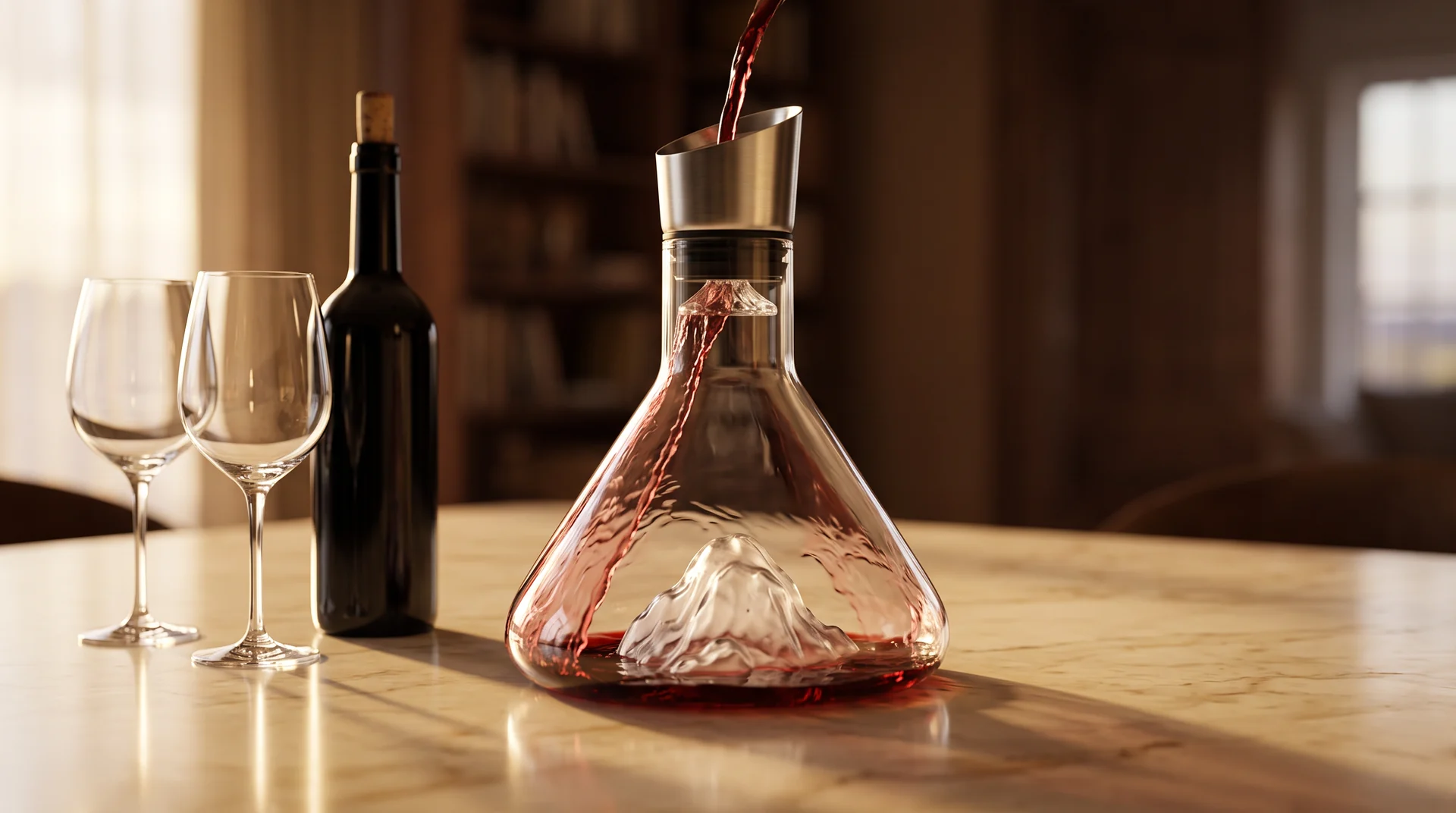
It stays on the table
Low, wide and heavy-based, so it does not need putting away between glasses. A full bottle goes in with room left over, which means one pour at the start of dinner instead of reaching for the bottle every round.
- Takes a whole bottle with headroom
- Low centre of gravity on a crowded table
- Clear glass shows the colour, which is half the pleasure
How do you use the iceberg wine decanter?
Pour
Empty the bottle straight through the steel funnel — the wine aerates on the way down.
Wait a few minutes
Give a tight young red five to ten minutes in the decanter. An older bottle needs less.
Serve
Pour from the decanter. Rinse it warm afterwards and stand it upside down to dry.
One to keep, one to give
The second decanter is the one that gets wrapped — and it drops the price per decanter by ten dollars.
What buyers say
“Poured a young Cabernet straight through it and the difference was obvious — none of that tight, closed-up first glass you normally get. It does what a long decant does, just on the way in.”
“The mesh in the funnel caught the sediment at the end of an older bottle without me having to pour carefully around it. Rinses out easily under the tap afterwards.”
“Looks far more expensive than it was, and the glass peak in the base is genuinely nice glasswork. Only note is that it wants a careful hand when washing.”
30 days to change your mind
If it is not what you pictured, email us within 30 days of delivery and we will sort out a return. Anything that turns up damaged we replace — full details are on the refund policy page.
Before you order
Wine poured into the steel funnel spreads into a thin sheet, runs down the cone and breaks over the peak. Thin moving wine meets more air than a still pool.
Yes. The funnel holds a fine steel mesh, so cork fragments and bottle sediment stay out of the decanter. Rinse the mesh after.
Red is where the difference is most obvious. It works with whites too, though most whites gain less from it.
Wine poured into the steel funnel is spread into a thin sheet that runs down the inside of the glass cone and breaks over the peak in the base. Thin, moving wine meets far more air than a still pool does, which is the same thing a long decant achieves — just faster.
The funnel holds a fine steel mesh, so cork fragments and the sediment at the bottom of an older bottle are caught before they reach the decanter. Rinse the mesh under the tap afterwards.
A full bottle, with headroom above it — the wine is meant to sit around the mountain, not up to the neck.
Rinse with warm water straight after use and stand it upside down to drain. Skip the dishwasher for the glass body; the steel funnel can be washed separately. No brush is needed if you rinse it before the wine dries.
Red is where the difference is most obvious, because tannic young reds are the ones that taste closed straight from the bottle. It works with whites too, though most whites gain less from it.
Shipping is a flat $8.95. Orders leave within 1–3 business days and US delivery usually takes 5–10 business days with tracking by email. You have 30 calendar days from delivery to start a return.
Open the bottle when you want the glass
Pick your pack — orders ship within 1–3 business days.